Worship and inspirational writing is functional music, not self-expression. A song that has to be sung by a room full of people with different ranges, different ages and different levels of confidence has hard constraints: a narrow melody, short lines, repetition with a purpose and words nobody has to explain afterwards. That is the whole job, and it is a genuinely different job from writing a record.
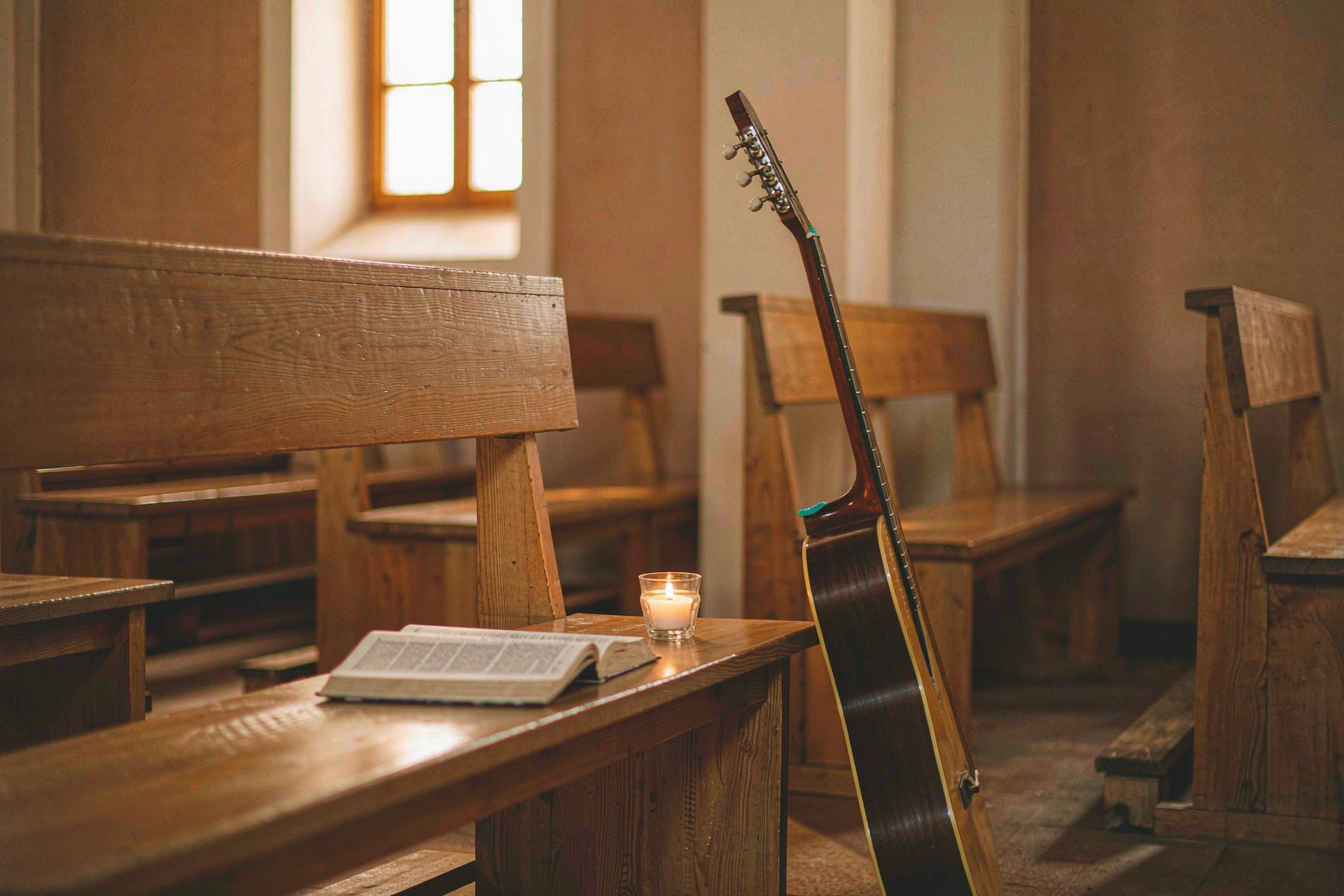
The second thing this family asks for is that the language be scripture-shaped rather than performer-shaped. In practice that means plain, durable words — light, water, shelter, morning, deliverance — arranged in cadences that sit naturally beside prayer and psalm rather than in the slang of a particular scene. Every tool here defaults to non-denominational phrasing, avoiding in-group vocabulary that would quietly exclude half the people in the room.
And that is why eleven tools exist instead of one. Southern gospel, urban gospel and CCM pop are not the same discipline wearing different hats. One leans on harmony parts and testimony storytelling, one on groove and choir answer, one on radio-shaped melody. A church-facing song and a hope anthem for a community fundraiser share almost nothing except sincerity — and sincerity alone is not a writing method.
Everything below generates original lyrics as a first draft — no existing songs, no hymn reproductions, no artist imitation. Run the draft past your own worship leader, pastor or faith community before it goes anywhere near a service; they know the room better than any tool does.
How to use these generators
Ask for the section a gathering can actually hold. A four-line chorus of short phrases beats a clever verse nobody can follow on a first hearing, and most practical church songs are built from a repeatable chorus plus one simple verse idea repeated twice.
Give the tool the shape of the moment: a gathering of thirty, sixty seconds of music, a theme like gratitude or lament. Then sing the result out loud in one pass — if a line runs out of air, it is too long, however well it reads.
All 11 faith lyric generators
Each tool opens the full generator with its style prompt pre-loaded. The one-liners describe what each one is tuned for, not the limit of what you can ask it.
- CCM Pop Lyrics GeneratorRadio-shaped contemporary Christian pop with bright choruses that still survive a congregational singalong.
- Christian-Safe Lyrics GeneratorFamily-friendly, values-first lyric writing with clean language applied from the very first line.
- Contemporary Christian Lyrics GeneratorModern faith songwriting that speaks plainly about belief without dated phrasing or in-group vocabulary.
- Praise Worship Lyrics GeneratorVertical lyrics addressed to God — short, repeatable lines built for a room singing together.
- Soulful Gospel Lyrics GeneratorTestimony-driven lines with call-and-response energy and open space for a choir to answer.
- Southern Gospel Lyrics GeneratorHarmony-group tradition: plain storytelling, homecoming imagery and steady assurance about the road ahead.
- Urban Gospel Lyrics GeneratorContemporary gospel groove with modern phrasing, choir padding and a declaratively resilient chorus.
- Hope and Dreams Lyrics GeneratorSecular-friendly inspirational writing about possibility, suitable for schools, nonprofits and community events.
- Success Anthem Lyrics GeneratorAchievement written as perseverance and effort rather than boasting — usable for teams and general audiences.
- Peace and Unity Lyrics GeneratorReconciliation and shared-ground anthems written to include everyone in the room instead of dividing it.
- Freedom Song Lyrics GeneratorLiberation writing in the deliverance and protest tradition, kept non-denominational and widely singable by default.
What actually changes between faith substyles
The deepest division here is not musical, it is grammatical: who the song is talking to. Praise worship generally writes upward — direct address, second person, simple statements of trust. A unity or freedom anthem writes outward — “we” language aimed sideways at the people standing next to you. Mixing the two carelessly produces the single most common flaw in this repertoire: a verse addressed to heaven bolted onto a chorus about the congregation, so nobody knows who is talking.
Southern gospel carries an older storytelling habit: verses that narrate a journey, plain diction, and assurance stated rather than argued. Urban gospel keeps the testimony but changes the engine — shorter phrases, repeated declarations, and lines written so a choir can answer them. Soulful gospel sits between the two and lives or dies on space: the words have to leave room for somebody to repeat, embellish or respond, which means writing fewer lines than you think you need.
CCM pop is its own discipline, because it is written for a listener rather than only for a participant. It can afford a little more imagery and a little more personal detail, but it loses the plot the moment the chorus becomes unsingable. And the four openly inspirational tools — hope, success, peace and freedom — are deliberately non-denominational, so they work in a school assembly, a nonprofit video or a community march with no editing at all.
Who is being addressed
Vertical songs speak upward with direct, second-person address. Horizontal anthems speak outward in “we” language to the people in the room. Decide before the first line, because switching mid-song is the fastest way to lose a congregation halfway through a chorus.
Range and repetition
A room will not sing what it cannot reach. Keep most lines inside a comfortable octave, prefer open vowels on long notes, and repeat the chorus often enough that visitors can join by the second pass. Repetition here is hospitality, not laziness.
Tradition register
Hymn-shaped writing tolerates older diction and steady meter; contemporary writing wants plain speech and fewer words. Both registers are legitimate, but mixing them inside one song makes it sound assembled rather than written. Pick one and stay in it.
Singable by a room, not a stadium
The practical test is unglamorous: can thirty people who have never heard this song sing the chorus on the second pass? That single question will cut more lines than any craft rule. It argues for short phrases, concrete nouns instead of abstractions, and a rhyme scheme obvious enough to predict. It also argues against the virtuoso verse — the line you are proudest of is usually the line nobody can follow.
Faith writing also carries a content responsibility that nobody can automate. Keep the language clean and welcoming, avoid imagery drawn from dating or partying, and prefer images that hold up across traditions. The site has a detailed listener and songwriter checklist for Christian-safe lyrics, and for the wider inspirational side there is a set of guided hope-themed writing prompts. If the brief turns out to be a campaign or a product rather than a gathering, the occasion generators handle that room instead.
A workflow that works
- Name the moment first: a Sunday gathering, a vigil, a school assembly, a nonprofit video. The setting decides more than the theme does.
- Choose vertical or horizontal address, then pick one key image to carry the song. One image is enough for a chorus that must be learned instantly.
- Generate the chorus alone and sing it twice. If you cannot remember it after the second pass, shorten the lines.
- Generate two verses using concrete situations instead of general feelings — a hospital waiting room says more than “struggle” ever will.
- Take the draft to your worship leader, pastor or community group and change whatever they flag. Their judgment about the room outweighs every line you like.
Related reading from the WrittenTone blog
- Christian Safe Lyric Rules: A Biblical Checklist for Listeners, Parents, and Songwriters
- Hope Themed Lyric Prompts: 40+ Guided Exercises to Write Songs That Actually Resonate
- Empowerment Anthem Structure: A Section-by-Section Blueprint
- Mood & Wellbeing lyric generators
- Occasion, Brand & Social lyric generators
Faith lyric generator FAQ
- Are these lyrics tied to a specific denomination or tradition?
No. Every tool here defaults to broad, non-denominational language that works across a range of congregations and settings. If your community uses particular vocabulary for a specific practice, add those words to your own edit rather than expecting them in the draft.
- Will the whole congregation be able to sing the result comfortably?
That is the design goal, not a guarantee. Ask for short lines and a repeatable chorus, then sing everything at real tempo in a normal speaking-room voice. Anything that runs out of breath is too long, whatever it looks like on the page.
- Do the tools quote scripture directly?
They write original lyric lines in a scripture-shaped register rather than reproducing existing translations. If your gathering expects a specific passage set word for word, place it yourself — that is a pastoral decision, not a writing one.
- Can I write an inspirational song for a completely secular audience?
Yes, and the hope, success, peace and freedom tools are built for exactly that — assemblies, fundraisers, teams and community events where faith-specific language would not fit. Name the setting in your brief and the phrasing will follow it.
The honest bit. These generators produce original first drafts — never reproductions of existing songs or hymns, and no artist imitation. Before leading anything publicly, have a real person in your community read the draft for accidental similarity to existing worship material; with millions of songs in the world, coincidence is real. Copyright for AI-assisted lyrics has specific rules — the site disclaimer covers them in plain language. And this page is maintained by an actual person: I’m Nico, I test every generator listed here, and the full library of 172 tools is one click away if worship isn’t the room you’re writing for today.